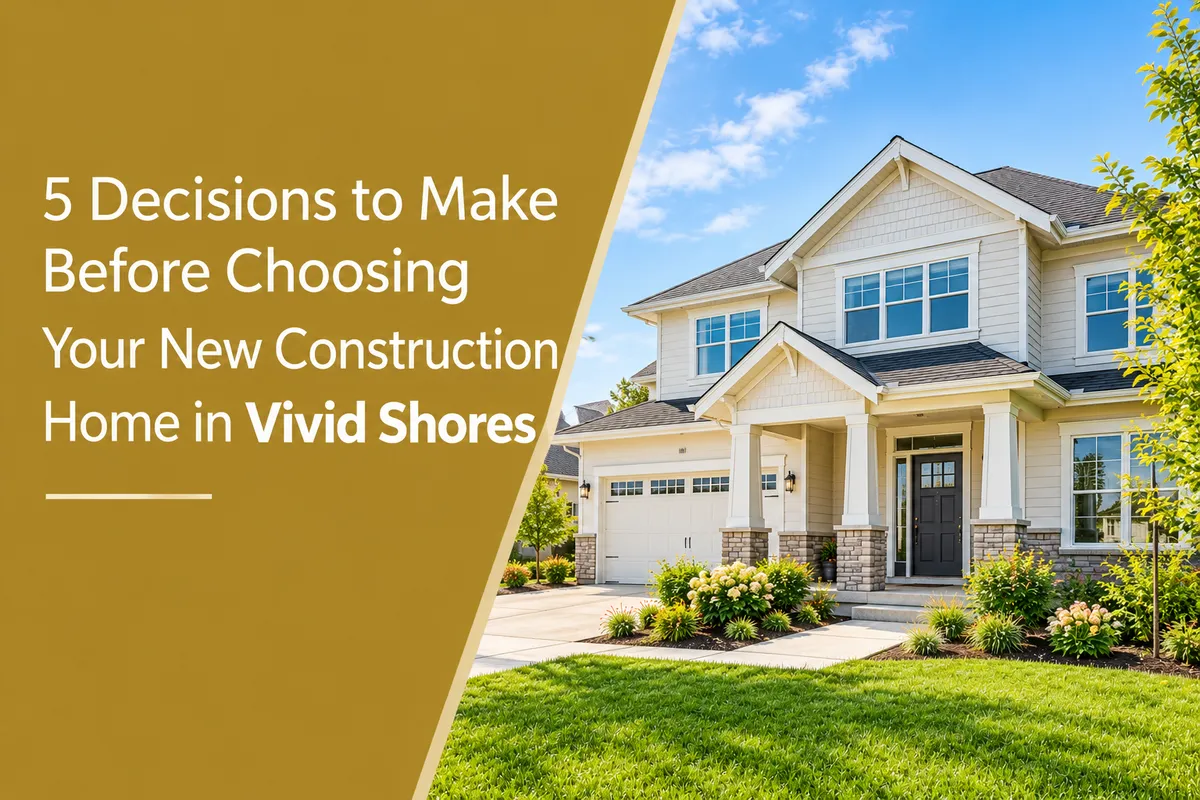
5 Decisions to Make Before Choosing a New Construction Home in Vivid Shores
Buying a newly built home is an opportunity to choose a property that fits your lifestyle from the beginning. In Vivid Shores, buyers should look beyond fresh finishes and attractive model homes. The floor plan, builder options, community rules, long-term costs, and surrounding area can all influence how comfortable the home feels after moving in.
For buyers exploring Kingston real estate, making a few important decisions before signing a purchase agreement can help prevent surprises and make the selection process more organized. Working with a knowledgeable real estate agent can also help you compare available homes, understand the purchase process, and evaluate whether a property meets your needs.
1. Decide How You Want to Use Your Space
Start with your daily routine rather than the model home's appearance. A beautiful kitchen or spacious primary bedroom may catch your attention, but the best floor plan is one that works for the way you actually live.
Consider how many bedrooms you need, whether a separate home office would be useful, and how much storage your household requires. Open living areas may suit buyers who enjoy spending time together, while a more divided layout can provide additional privacy.
Think about your future needs as well. A room that serves as a guest bedroom today might eventually become an office, hobby room, or flexible living space. Choosing a practical layout at the beginning can reduce the need for expensive changes later.
2. Understand What the Builder's Price Includes
A model home often features design choices that may not be included in the advertised base price. Cabinets, flooring, appliances, lighting, upgraded countertops, and outdoor improvements can vary depending on the builder's package.
Before comparing homes in Vivid Shores, request a clear breakdown of what comes standard and what costs extra. Review the specifications for each property instead of relying only on the model home's appearance.
It is also useful to decide which upgrades matter most to you. Some buyers may prioritize kitchen finishes, while others may prefer better storage, practical flooring, or improvements to outdoor living areas.
A real estate agent can help you review the available information and identify details that deserve clarification before you commit.
3. Look Beyond the House to the Community
A home is part of a larger setting. The surrounding community, access routes, nearby services, and planned development can affect how convenient the property is for everyday life.
When evaluating Vivid Shores, verify the location of the specific property and consider the places you expect to visit regularly. Check your likely commute, access to grocery stores and essential services, and proximity to schools or recreational facilities that matter to your household.
Buyers comparing options in Verdana Village may also want to assess how the community's setting and available features match their priorities. The same approach applies when considering The Place At Corkscrew: evaluate the individual home alongside the wider living environment rather than making a decision based on the property alone.
4. Calculate the Full Cost of Ownership
The purchase price is only one part of owning a new construction home. Buyers should prepare a complete budget that reflects the costs of purchasing, maintaining, and living in the property.
Depending on the home and community, expenses may include property taxes, homeowners insurance, homeowners association fees, utilities, landscaping, and routine maintenance. If the property is part of a managed community, review the association documents to understand applicable charges and restrictions.
Ask the builder which closing costs or other charges may apply and whether any advertised incentives have conditions. Confirm important details with the appropriate professionals rather than relying on verbal estimates alone.
A realistic budget should also leave room for furniture, window coverings, appliances not included in the sale, and other items needed after moving in. These costs can add up even when a home is brand new.
5. Review the Contract, Timeline, and Inspection Process
New construction does not eliminate the need for careful property review. Before signing, understand the purchase agreement, deposit requirements, construction schedule, cancellation terms, and procedures for handling delays or changes.
Ask how the builder communicates progress and what happens if the estimated completion date changes. Confirm which warranties apply, how warranty requests are submitted, and what documentation you will receive at closing.
Independent inspections can be valuable at appropriate stages of construction and before closing, subject to the contract and access arrangements. A qualified inspector may identify items that need attention before you take ownership. Review any findings with the builder and confirm that agreed repairs are completed and documented.
A real estate agent representing your interests can help you organize questions, track important dates, and understand the documents involved. For legal or contractual questions, seek advice from a qualified professional.
Making a Confident Choice in Vivid Shores
Choosing a new construction home involves more than selecting a floor plan and picking finishes. The strongest decision comes from balancing your everyday needs, the builder's specifications, the community environment, your complete budget, and the terms of the purchase agreement.
Buyers exploring Vivid Shores can use these five decisions to compare properties more carefully and focus on what will matter after move-in day. Amanda Bolduc can be a point of contact for buyers seeking real estate guidance through her website. Before relying on any specific service, credential, or community detail, confirm it directly with the agent or the relevant provider.
A well-considered purchase gives you a clearer understanding of the home you are buying and the responsibilities that come with owning it.
Frequently Asked Questions
Is a new construction home always move-in ready?
No. Completion dates and included features vary. Confirm the home's status, specifications, and expected handover date with the builder.
Should I have a new construction home inspected?
An independent inspection can help identify issues before closing. Confirm access arrangements and inspection timing with the builder.
Are upgrades included in the base price?
Not necessarily. Request a written list of standard features, optional upgrades, and additional charges.
What costs should I budget for besides the purchase price?
Consider taxes, insurance, association fees, utilities, closing costs, maintenance, and items needed after moving in.
Can a real estate agent help with a new construction purchase?
Yes. An agent can help you compare properties, organize questions, review available information, and navigate the purchase process. Confirm representation arrangements before proceeding.